Fujitsu
Fujitsu

DoCoMo Announces 702i-series 3G Handsets
DoCoMo Announces 702i-series 3G HandsetsNTT DoCoMo held a press conference in downtown Tokyo this afternoon to announce the spring roll-out of five new handsets in the 702i-series for FOMA 3G phones (Sharp, NEC, Fujitsu, Mitsubishi and Panasonic). The series includes three ‘designer’ models — a first for DoCoMo. The carrier invited three prominent designers to work on the SH702iD, the N702iD and the F702iD. If the solid success with designer models enjoyed by competitors KDDI and Vodafone is any hint, DoCoMo should do modestly well with this new low-budget series.

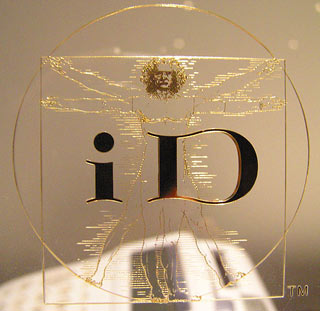
Big D appears unconcerned over the potential conflict in the series’ naming. The three designer 702s are dubbed “iD” — possibly for “i-mode designer” or “independent designer.” However, the Fujitsu model is also FeliCa- and mobile Suica-compatible, and all FeliCa models to date have been dubbed “iC” (indicating ‘IC chip’). Should the Fujitsu therefore be the F702iCD? The giant carrier also seems keen on promoting its new iD credit-card (website) having created this cool ‘Vitruvian Man’ logo that we’ve noticed splashed all over Tokyo the last few weeks. That new m-commerce application is included on the Fujitsu 702iD model (but not the SH702iD or the N702iD) and we expect there could well be some confusion in the marketplace between these unrelated iD brands.

This is the first 70x-series to offer automatic Security Scan, which uses automatic downloads in the background to update phones with the latest security software from DoCoMo. The five models will be exhibited at Aoyama Spiral from January 17 to 22. More details on today’s press conference after the jump

Fujitsu to Demo Newest WiMAX

Fujitsu Microelectronics America will demonstrate its newest WiMAX reference design system at the 12th annual Wireless Communications Association (WCA) International Symposium, January 17-19, at the Fairmont Hotel in San Jose. The Fujitsu demonstration will feature a WiMAX base station communicating with a subscriber station built using the Fujitsu WiMAX reference design kit. The kit incorporates all the hardware and software required to allow designers to develop WiMAX-compliant equipment based on the Fujitsu MB87M3400 WiMAX System-on-Chip (SoC), the industry-leading WiMAX implementation.

New Fujitsu-Siemens Smartphone

According to leaks around the web, Fujitsu-Siemens will unveil a high-end smartphone loaded with features at 3GSM in March. The T800 [ .jpg image ] will roll-out a QWERTY keyboard with a 240×240 display, rumored to be running Windows Mobile 5.0 Phone Edition on a 416 MHz XScale processor. Also predicted 64 MB of RAM and 128 MB of Flash ROM for storage the new unit will supposedly offer Wi-Fi (802.11b/g) and Bluetooth 2.0 as well.

Japan Approves Three New Groups for 3G

Japan Approves Three New 3G CarriersBack in 1999, when I was editing Computing Japan magazine, we ran an article entitled “Third Generation Mobile: Three Groups for 3G” looking at the three groups — NTT DoCoMo, IDO-DDI (later, with KDD, KDDI) and IMT-2000 Planning Corp. (later J-Phone) — lining up for a new license. The prediction was that “success for the 3G business depends on the digital content.” Now, 7 years later, three new hopefuls are lining up in a far more mature market, and not only content but also terminals, churn, number portability and voice versus data will be significant factors.
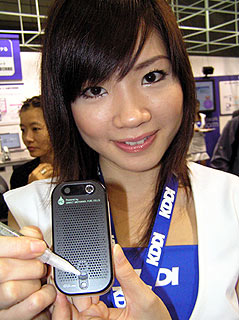
On November 10, Japan’s Ministry of Internal Affairs and Communications said it would grant three new carriers licenses to operate in the 1.7 and 2 GHz bands; BB Mobile of Softbank Corp. and e-mobile of eAccess Ltd. will offer services based on W-CDMA technology while IPMobile Inc. will offer Japan’s first TD-CDMA-based services. The three are expected to launch later in 2006.

The three newcomers are entering a highly competitive market dominated by three existing incumbents: NTT DoCoMo Inc., KDDI Corp. and Vodafone K.K., which reported a collective 89.4 million subscribers as of October 31. The new players are expected to expand the variety of wireless services and pricing levels available, providing more choice and lowering costs — not least of all for terminals — according to one ministry quotation.

Wireless Watch Japan Intelligence from CEATEC

Wireless Watch Japan Intelligence from CEATEC

The Mobile Intelligence Japan (MIJ) team spent Wednesday at the CEATEC show, checking out some of the most innovative mobile tech and services the Japanese ecosystem is currently developing. To start, Hitachi’s methanol fuel-cell handset for KDDI [ close-up image here ] was one of the major announcements made during this year’s event. Several Japanese electronics manufacturers, including Toshiba and Fujitsu, are working on a fuel-cell solution for powering and recharging cell phones and other portable devices; Fujitsu’s rather large (as big as a shoe?) version for DoCoMo provides up to 9 Watt-hours of juice.

There were also big line ups to view the new digital TV cell phones made by Sanyo, Panasonic and Sharp (for each of KDDI, DoCoMo and Vodafone) with plenty of people crowded around the NHK booth to test drive one of the units; all are due to launch by next spring and run for around 2 hours.

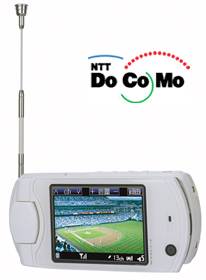
Later, we spotted Net2Com’s new IP-and-Skype handset available (since last week) for Livedoor mobile customers and were surprised to see a prototype streaming satellite handset from DoCoMo. The Mobaho! compatible phone — a full FOMA 3G device — will receive music and other programming direct from Mobile Broadcasting Corp.’s bird high above Tokyo and will launch next spring; the Mitsubishi-made device has about 2 hours of continuous playback time and appears intended to steal some of KDDI’s Chaku-Uta-Full thunder. Be sure to watch our latest video program featuring EZ Channel.

Finally, your WWJ crew had a chance to sit down and speak with Dave Graveline to record a radio interview covering some of the show’s highlights to be broadcast on 10 October.

DoCoMo Announces Japan's First Digital Broadcast Cellphone

DoCoMo Announces Japan's First Digital Broadcast CellphoneDoCoMo has developed their first mobile handset to receive terrestrial digital broadcasting and analog TV in one 3G Foma package. The P901iTV handset, by Panasonic, targets the start of mobile digital broadcasting in April, 2006 and will make its public debut at the upcoming CEATEC Japan 2005 trade show October 4 to 8 at Makuhari Messe convention center in Chiba. (WWJ will be on-hand to get photos and video!)

The twist-style handset comes with a 2.5-inch, wide-view main LCD screen plus a sub-display, antenna-embedded earphone for enhanced TV reception, and 2.2-megapixel camera. The handset can only handle around 2.5 hours of continuous digital TV viewing; 1.5 hours of analog — ruling out Lord of the Rings style 3-hour viewing marathons. DoCoMo’s Osaifu-Keitai mobile wallet is part of the package as well, enabling the phone to be used as electronic money.

Vodafone and KDDI have had demonstration models of terrestrial digital TV receiver/handsets for some time. Last may their latest versions were up and running at the NHK Science and Technical Research Laboratories open house. Vodafone displayed the 801SH Sharp CDMA Qualcomm handset with a hybrid split-screen displaying TV images on the upper half with the bottom reserved for scrolling data feeds. KDDI showed off a similar au prototype handset by Sanyo. Check-out our video report from that event here.