

HSDPA
HSDPA

DoCoMo Plans to Test WiMax

DoCoMo also announced today that it has applied to the Ministry of Internal Affairs and Communications for a license to set up experimental outdoor wireless stations to test WiMAX, which they refer to as a “new wide-area wireless broadband network technology, based on the IEEE 802.16e standard.” According to the statement, DoCoMo, working in collaboration with other NTT group companies, will conduct the test in the Yoyogi area of Tokyo for about one year using the 2.5GHz frequency band.
eMobile Chooses Ericsson Network

eMobile, a new entrant to the Japanese 3G market, has selected Ericsson as the prime supplier of its new W-CDMA/HSDPA network. The agreement involves W-CDMA 1.7GHz radio networks in the most
populated areas of Japan, such as Tokyo, Nagoya and Osaka, and a complete nationwide core network, including Ericsson’s service-aware packet core and mobile softswitch solution. Fast roll-out will enable eMobile, a subsidiary company of eAccess, to launch commercial services in March 2007.

Freescale RF Technology to Further Reduce Size and Cost of 3G Handsets

Freescale Semiconductor is developing a highly integrated, single chip RF solution for 3G mobilephones. Targeted for the Japan market, this RF solution supports tri-band WCDMA and quad-band GSM/GPRS/EDGE. The RF solution is based on Freescale’s advanced 90nm RF CMOS process technology and delivers an antenna-to-bits functionality in asingle chip. Additionally, it is capable of meeting Category 8 HSDPAand HSUPA requirements.

Global 3G Platform Announced

NTT DoCoMo, Inc., Renesas Technology Corp., Fujitsu Limited, Mitsubishi Electric Corporation and Sharp Corporation today announced that they will jointly develop a comprehensive mobile phone platform combining a single-chip LSI for dual mode handsets supporting HSDPA /W-CDMA and GSM/GPRS/EDGE, and core software such as operating systems. The new mobile phone platform will help accelerate the global adoption of W-CDMA services including FOMA, and lower the costs of these handsets. The companies expect to have the platform developed around Q2/FY2007 (July-September).

3G Mobile Future: Exclusive Interview with Tomi Ahonen

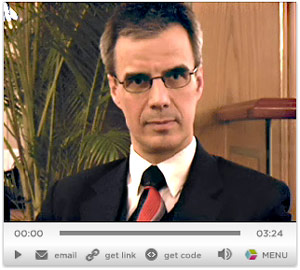
3G Mobile Future: Exclusive Interview with Tomi AhonenTomi Ahonen is a smart guy who’s done a lot of observing and thinking about the 3G future. He reports that planet Earth has 2 bn mobile phones, with more phones in use than cars, credit cards or televisions, and that advertisers, businesses and governments are all trying to understand how the mobile future will download. For a glimpse into the future, Tomi was in Tokyo last month for the 3G Mobile World Forum 2006 where he observed that Japan already has the handsets, the networks and users who have migrated to 3G, while “the rest of the world is just starting to understand and discover this opportunity.”

He points out that in Japan, roughly 30 percent of all mobiles are 3G phones, compared to the UK, where it’s only 8 percent. “We have a long way to go to catch up.” WWJ’s Lawrence Cosh-Ishii caught up with Tomi for a tightly-focused interview covering 3G, 3.5G, consumer service definition, key technologies and how marketing and advertising are starting to recognize the potential of mobile.

QUALCOMM Enhances Deployment of Location Services for WCDMA

QUALCOMM announced that it has streamlined the deployment process for providing location services on WCDMA (UMTS)/HSDPA/GSM/GPRS/EDGE networks around the world. Open Mobile Alliance (OMA) Secure User Plane for Location (SUPL) 1.0 software is now offered broadly across QUALCOMM’s WCDMA (UMTS) portfolio of Mobile Station Modem (MSM) chipsets as part of the gpsOne solution, offering a consistent platform for the rollout of Assisted-GPS (A-GPS) technology and the location services it enables. Support for the OMA SUPL 1.0 protocol, accepted industry-wide, delivers significant cost-efficiency benefits for network operators deploying location services and offers wireless users a seamless experience when roaming onto other WCDMA (UMTS)/HSDPA and GSM/GPRS/EDGE networks.