DoCoMo
DoCoMo

ACCESS and Abaxia Collaborate to Deliver New Data Capture Paradigm to Mobile

ACCESS announced that it has collaborated with Abaxia to integrate its MobileTag 2D barcode reader solution with ACCESS’ NetFront® Mobile Client Suite, the world’s most advanced, integrated browser-based software solution for advanced multimedia-enabled mobile phones. The joint solution enables a new data capture model between mobile devices and barcode-enabled applications like advertisements, brochures, posters, direct-mailers, or any object that can support a barcode.

Thai TOT seeks Japan partner

TOT Corp. PCL, Thailand’s state-owned telecommunication agency, is in talks with two Japanese firms in its search for a partner for its telecom unit to speed up its move to third-generation, or 3G, services. TOT expected to conclude the talks before launching its initial public offering (IPO) in late October, agency president Teerawit Charuwat told reporters.

DoCoMo Announces Five New 3G Wallet Phones

DoCoMo Announces Five New 3G Wallet Phones

With little fanfare and no press conference, NTT DoCoMo has released five new 3G FOMA 901iS FeliCa-enabled handsets into the digital world: D901iS (Mitsubishi), F901iS (Fujitsu), P901iS (Panasonic), N901iS (NEC) and SH901iS (Sharp). All have certain features in common with other 901i models, including music players, “3D Sound,” Deco-Mail to decorate email, G-GUIDE interactive TV guide and recording programmer (see the .pdf for full specs). New features include a 4-megapixel recorded resolution camera for the D901iS and a full Web browser on the N901iS. The company says that the 901iS-series is DoCoMo’s first in which all models are equipped for mobile-wallet functions, but the five handsets actually do a lot more than drain virtual bank accounts. The pre-installed Adobe Reader LE, for example, enables 901iS phones to view PDF files downloaded from i-mode sites. The application includes access to all basic PDF functions including scrolling, paging, text searches, bookmarks and page rotation and users can easily email files, dial a number or navigate to a Web link in the file. But wait, there’s more…


KDDI Ready to Roll-Out Free Mobile Blog (MoBlog) Service

KDDI Ready to Roll-Out Free Mobile Blog (MoBlog) Service

Word to the Wireless — Japan’s KDDI will launch a free mobile weblog system, dubbed Duoblog, for subscribers to its 3G WIN EZ Web service on 19 May. In a first from Japan cellcos, users can access and update these mobile blogs directly from their handset or PC through the KDDI Duogate portal. Duoblog sites will be fully customizable with backgrounds (skins), emoticons, images, and applications. Maybe your humble scribes here at WWJ should sign-up and join in the fun..?!? Overseas mobile sites like WinkSite and Hip-Top Nation (to name a few) already provide tools to create free moblogs (mobile blogs) or mobile editions of web logs that can be accessed worldwide from Web enabled cell phones, PDAs and PCs.

At press time, NTT DoCoMo spokesperson Tomoko Tsuda stated that the company has “no immediate plans” to launch a mobile blogging site. Vodafone Japan, too, is taking a wait-and-see attitude, saying they would “monitor market developments in this regard.”

Japanese Use Cell Phone QR Bar Code Readers to Check Food Safety

Japanese Use Cell Phone QR Bar Code Readers to Check Food Safety

Belly up to the Bar Code: QR codes are reducing the fear factor for foodstuffs in Japan as agricultural associations embrace the new wireless technology tagging fresh produce for quick access to mobile information Web sites. A new English-language report [.PDF] released this month by NTT DoCoMo on QR code use in agriculture reveals the growing popularity of this medium.

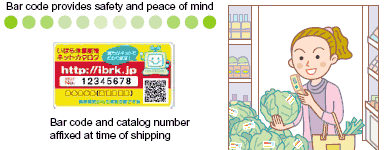
Forget any assumptions about Hicksville. Japanese farmers have little fear of technology. Rural Ibaraki Prefecture has turbo charged their QR coding for agricultural products tagging a wide variety of vegetables grown in that prefecture. Ibaraki Prefectural authorities and the JA Ibaraki Prefecture Central Union of Agricultural Cooperative cooperating with other farming and agricultural associations are adding QR code labels right at the point of origin. In the supermarket, consumers use camera equipped cell phones to scan the QR code on the label. The code links to a mobile website detailing origin, soil composition, organic fertilizer content percentage (as opposed to chemical), use of pesticides and herbicides and even the name of the farm it was grown on. Consumers can also access the same information over the Ibaraki Agricultural Produce Net website by inputting a numbered code on each label.

DoCoMo Sells Stake in Hutchison 3G

NTT DoCoMo, Inc. announced today that it will complete the sale of its 20% stake in Hutchison 3G UK Holdings Limited (“H3G UK”) to Hutchison Whampoa Limited (“HWL”) on June 23, 2005. DoCoMo will record a gain on sale of affiliate shares of approximately 62 billion yen on a consolidated basis in the fiscal year ending March 31, 2006 including foreign currency translation adjustment and as a result, will amend its consolidated financial forecasts, which were announced on May 10, 2005.