DoCoMo
DoCoMo

NTT DoCoMo Unveils 3G Push-To-Talk Phones
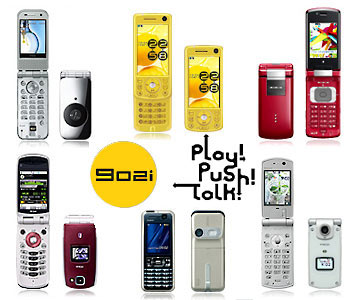
NTT DoCoMo Unveils 3G Push-To-Talk PhonesNTT DoCoMo have just the new 902i-series of 3G FOMA handsets, featuring the new "PushTalk" walkie-talkie-style communication service. PushTalk will run over the 3G packet communication network and will allow phones to be used like walkie-talkies for simultaneous, one-way communication from one 902i user to as many as four other 902i users. The service will be launched in the near future concurrently with the 902i-series. DoCoMo said they are planning to waive communications charges (5.25 yen for each one-way call) through the end of December 2005.

The announcement confirms recent rumours (reported on WWJ) that the giant carrier would market a walkie-talkie-style service, already popular in the US, to defend falling market share and respond to flat-rate voice and data products offered by KDDI/au, Vodafone Japan and Willcom.
Can Visto, Vodafone, Nokia Push Email into Corporate Pockets?

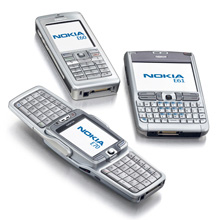
Nokia E-SeriesA brief prediction. While idly surfing about the web today, I noticed that Visto, a US-based developer of corporate email solutions, has started a Japanese-language website; there’s no new, startling information, but they’ve translated their product & corporate data, news releases, etc. — presumably, at some cost. Why the big effort? They’ve just announced a deal to deliver push email on Nokia’s new E-series business devices (did someone say "Looks like a Blackberry?"); they are also working with Vodafone in The Netherlands for mobile email.

It doesn’t take a great leap of imagination to predict they’ve got a deal cooking with Big Red in Japan. Could Visto and Vodafone, the come-from-behind 3G carrier, have a chance to place a Nokia Blackberry-style device into Japan’s potentially lucrative corporate market, populated by salarymen who have until now disdained ultra-cool email-capable 3G phones for anything other than low-margin voice calls? Until now, only DoCoMo has provided any sort of mail-capable, PDA-type device, and only to mixed results (the devices, notably from Sharp and Motorola, have been rather pricey). December’s shaping up to be an interesting month.

DoCoMo, Rakuten to Form Strategic Alliance in Internet Auction Services

DoCoMo and Rakuten to Form Strategic Alliance in Internet Auction ServicesJapan’s top mobile carrier DoCoMo and leading online mall operator Rakuten have forged a capital alliance to expand mobile auction services. Rakuten will spin off its peer-2-peer (P2P) auction network, Rakuten Flea Market, into a separate entity, Rakuten Auction, Inc from Dec. 1st. DoCoMo will then invest 4.2 billion yen ($37 million) starting Dec. 16 for a 40 percent share of the new firm. The deal does not include Rakuten’s profitable B2C (Business-2-Consumer) Super Auction site, which offers new goods from its huge listing of online mall operators. Rakuten currently has around 17.3 million users; DoCoMo 45 million subscribers.
Anxious to break the news to the media, the planned tie-up was announced at a hastily called press conference in Tokyo’s Okura Hotel with virtually no details on how the two firms plan on tweaking the service to attract DoCoMo users or differentiate it from KDDI’s EZ Web auAuction or even Rakuten’s current somewhat limited mobile auction portal. DoCoMo President Masao Nakamura and Rakuten President Hiroshi Mikitani were ill prepared to answer questions from the media pressing for more details.

Mobile Intelligence Japan Wrap!

Mobile Intelligence Japan Wrap!On Friday, the MIJ team wrapped up the October mission to Tokyo and headed home to the Heartland for happy hour and some relaxed networking; everyone was pooped but delighted with the program (so said the team, not me the organiser!).
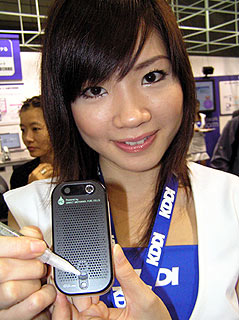
After a full day Wednesday at CEATEC to view fuel-cell mobile batteries, digital-TV handsets and a super new satellite pocket rocket from DoCoMo, we spent Thursday and Friday back on the MIJ agenda, meeting with, respectively, an LBS application developer, a major content aggregator, an alternative mobile payment provider (to find out what to do when your content is just too pricey for the official menus), a mobile marketing manager and a 3G carrier, among others. Thursday evening was another highlight as we met with Andrew Shuttleworth, one of Tokyo’s most knowledgeable and opinionated mobile application usability gurus, and a trio of young, female, non-tech Japanese college students who utterly tore apart preconceived notions of why Japanese use mobile like they do. (What? You mean you don’t like to pay for content??)

Listen to WWJ’s Lawrence Cosh-Ishii and Daniel Scuka begin_of_the_skype_highlighting     end_of_the_skype_highlighting on Dave Graveline’s “Into Tomorrow” live at CEATEC; from 11:00-mark via MP3 Here.

Wireless Watch Japan Intelligence from CEATEC

Wireless Watch Japan Intelligence from CEATEC

The Mobile Intelligence Japan (MIJ) team spent Wednesday at the CEATEC show, checking out some of the most innovative mobile tech and services the Japanese ecosystem is currently developing. To start, Hitachi’s methanol fuel-cell handset for KDDI [ close-up image here ] was one of the major announcements made during this year’s event. Several Japanese electronics manufacturers, including Toshiba and Fujitsu, are working on a fuel-cell solution for powering and recharging cell phones and other portable devices; Fujitsu’s rather large (as big as a shoe?) version for DoCoMo provides up to 9 Watt-hours of juice.

There were also big line ups to view the new digital TV cell phones made by Sanyo, Panasonic and Sharp (for each of KDDI, DoCoMo and Vodafone) with plenty of people crowded around the NHK booth to test drive one of the units; all are due to launch by next spring and run for around 2 hours.

Later, we spotted Net2Com’s new IP-and-Skype handset available (since last week) for Livedoor mobile customers and were surprised to see a prototype streaming satellite handset from DoCoMo. The Mobaho! compatible phone — a full FOMA 3G device — will receive music and other programming direct from Mobile Broadcasting Corp.’s bird high above Tokyo and will launch next spring; the Mitsubishi-made device has about 2 hours of continuous playback time and appears intended to steal some of KDDI’s Chaku-Uta-Full thunder. Be sure to watch our latest video program featuring EZ Channel.

Finally, your WWJ crew had a chance to sit down and speak with Dave Graveline to record a radio interview covering some of the show’s highlights to be broadcast on 10 October.

KDDI's EZ Channel at CEATEC

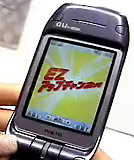
KDDI's EZ Channel at CEATECCEATEC, otherwise known as ‘Disneyland for mobi-keeners,’ is possibly planet Earth’s most intense concentration of mobile goodies. KDDI’s “EZ Channel” system, launched together with flat-rate data billing and the high-speed 1X EV-DO “WIN” 3G network in late 2003, is one of the few content services optimised for the network’s 2.4-Mbps nominal speed. WWJ went to CEATEC to grab the details on EZ Channel, which includes a unique overnight download feature that makes use of the quietest time of the day to deliver up to 3 megabytes of video programming to subscribers’ handsets while the network snoozes.

The EZ Channel service allows subscribers to select 3 programs from a menu of 53 channels (by end-October 2005), including news, weather, sports and entertainment favorites such as “Chaku Uta Ranking” (Label Mobile), “Sponge Bob Mobile” (Viacom) and Disney Mobile Wave. A single channel typically runs up to 1MB, and is refreshed 1-3 times per week (some, like weather, are new daily).