
DoCoMo
DoCoMo

DoCoMo Credit-Card Site Soft Launch
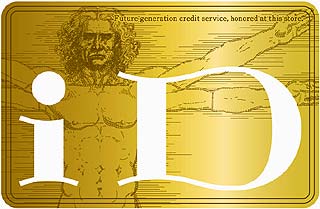
DoCoMo credit cardOn 8 November, DoCoMo said they would start offering a new FeliCa-compatible credit card, called the ‘iD card‘ (that’s ‘i’ and in ‘i-mode’ and — we guess — ‘D’ as in ‘dominant market position’), on 1 December. The iD card will allow i-moders to make credit card payments with a FeliCa eWallet phone; Big D said the payment procedure will be “as simple as waving the phone in front of dedicated reader/writers at stores.” Now, it looks like their Flash-heavy, groovy, dedicated iD-card website is now open, trolling for prospective customers.

When you’re the dominant wireless carrier in the market, and you’ve invested billions in building a 3G network, but hoped-for packet revenues collapse when your No. 1 competitor beats you up with flat-rate pricing, launching your own credit-card brand is a sensible option. Welcome to the ultra-high-tech, but old-fashioned-business-model, future..

Starhub's EASi-Mode for Singapore

Even before its official launch, StarHub’s i-mode has more than 50 content providers on board. The list includes MediaCorp TV, MTV, OCBC Bank, Yahoo!, Far East Flora and Zuji Singapore. StarHub hopes to attract 50,000 users within the first year, but i-mode is a unique proposition. The service requires i-mode compatible phones from the likes of Samsung and NEC, so you cannot use other 2G or 3G handsets to access the service. StarHub will reveal full details to the press tomorrow.

Web Update: 18 Nov. DoCoMo PR confirms.

DoCoMo to Buy China-Made Handsets

NTT DoCoMo may buy cheaper handsets made in China by NEC Corp., its No. 2 supplier, to cut costs as revenue falls. The company is also offering handsets from overseas vendors such as Nokia Oyj and LG Electronics Inc. in the coming year, Chief Financial Officer Yoshiaki Ugaki said in an interview conducted on Nov. 15. Foreign-made phones can be as much as 10,000 yen ($84) cheaper than domestic handsets used on the company’s high-speed network, he said. DoCoMo expects costs to sell new handsets to rise in the fiscal second half as more customers typically upgrade or buy new phones at the end of the business and academic year in March, Ugaki said.

Vodafone Pursues Potential MVNO's

Bill Morrow, who heads Vodafone’s Japan operations, said on Wednesday the UK mobile operator was “feverishly in negotiations with quite a few” potential MVNOs. The world’s largest mobile operator by revenues wants to sign up to 10 MVNOs within two years, with the first contract expected to be signed in the next financial year. Such a deal would make Vodafone the first mobile phone network wholesaler in Japan. NTT DoCoMo and KDDI, the country’s largest mobile operators, have said they do not have enough capacity to lease their networks to MVNOs.

Japan Approves Three New Groups for 3G

Japan Approves Three New 3G CarriersBack in 1999, when I was editing Computing Japan magazine, we ran an article entitled “Third Generation Mobile: Three Groups for 3G” looking at the three groups — NTT DoCoMo, IDO-DDI (later, with KDD, KDDI) and IMT-2000 Planning Corp. (later J-Phone) — lining up for a new license. The prediction was that “success for the 3G business depends on the digital content.” Now, 7 years later, three new hopefuls are lining up in a far more mature market, and not only content but also terminals, churn, number portability and voice versus data will be significant factors.

On November 10, Japan’s Ministry of Internal Affairs and Communications said it would grant three new carriers licenses to operate in the 1.7 and 2 GHz bands; BB Mobile of Softbank Corp. and e-mobile of eAccess Ltd. will offer services based on W-CDMA technology while IPMobile Inc. will offer Japan’s first TD-CDMA-based services. The three are expected to launch later in 2006.

The three newcomers are entering a highly competitive market dominated by three existing incumbents: NTT DoCoMo Inc., KDDI Corp. and Vodafone K.K., which reported a collective 89.4 million subscribers as of October 31. The new players are expected to expand the variety of wireless services and pricing levels available, providing more choice and lowering costs — not least of all for terminals — according to one ministry quotation.

Govt to Study Re-Organization Plan

Telecom minister Heizo Takenaka pledged Friday to examine NTT’s plan to reorganize its structure and eliminate overlapping businesses. The remarks from the minister of internal affairs and communications came two days after the telecom giant unveiled the reorganization plan, which is designed to offer Internet and telecom services, among others, for corporate clients at competitive fares.