

Mobile Music Best Practices from Japan and Korea
While Japan’s music market is second only to the US, with $3.5 bn in CD sales, it ranks first in mobile music in terms of market size, service penetration and sophistication. Japanese record labels have managed a powerful comeback from their failure in the wild, MIDI ring tone-based 2G music market to massive success in the master-rights-based "Chaku-uta" 3G universe. They already own a 20-percent share of Japan’s $1-billion-plus mobile music market. How did they pull off this stunning achievement? The labels identified their core assets in the mobile universe: trust and convenience.
Editor’s Note: Today’s guest Viewpoint is based on "Mobile Music Best Practices from Japan and Korea," a 103-page report recently released by Vectis International. WWJ subscribers login to read the article and receive a special 10% discount coupon!!
Researched and written over a period of several months by Simon Bureau, Managing Director and Editor, and Benjamin Joffe, Japan Market Analyst — two of the saviest mobile industry watchers in Asia — Vectis’ "Mobile Music Best Practices" provides 103 pages of sharp and critical analysis covering mobile music downloading as it has developed in the world’s top two wireless markets. With reference to carriers, content providers, networks, terminals, pricing, marketing and end-user behavior, "Mobile Music" is a must-read for anyone involved in planning and commercializing on-the-go music services anywhere.
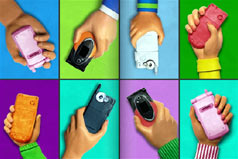 Digging deep into Japan’s blog space over ice coffee this morning turned up interesting rumors (and some detailed specs) concerning DoCoMo’s next generation of 3G FOMA handsets. The dog days of summer is about the right time for an announcement from Big D’s Sanno Park Tower HQ on models slated for release sometime in Q3 and we’re willing to bet that these rumors may just have some substance behind them. While WWJ subscribers can log in for the full juice, we will say up front that more than one blog has mentioned 10 new models coming from all the usual suspects (NEC, Panasonic, Fujitsu, Sharp, etc.) plus a couple foreign-made entries for what should be called the 902i-series.