

DoCoMo Plows $343.8 Million into 3.5G HSDPA
Signaling its seriousness to get its HSDPA (high-speed downlink packet access) network and concomitant mobile/smart phones up and transmitting in 2005, NTT DoCoMo said today that it is plowing 37 billion yen ($343.8 million) into 5 Japanese handset and network builders AND Motorola Japan Inc. What is immediately surprising about this move is that once again, as with yesterday’s media extravaganza on the new 900i phones, long-term handset partners Toshiba, and handset maker and major infrastructure builder Sony Ericsson are both missing. But it now looks like DoCoMo feels its time to start really kicking in the efficiencies to differentiate itself from KDDI’s WIN service both in terms of performance and, more critically, to faster recoup the considerable investment the company has made in 3G as it probably gears up for a packet price war with KDDI and Vodafone KK. And then, there is the leveraging of Motorola’s Linux links too!
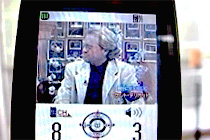 It’s sassy, not clunky – but analog only. If this sounds like an ode to Japan’s first Tellycelly, please make your call swift: The TV will only run about an hour before the batteries poop, but the sales potential is, we think, killer. Vodafone’s V601N [
 Japan is the nation of early adopters for mobile, but there’s one consumer app. that went flat and is now undergoing heart massage by some of the country’s biggest and best companies: Telematics is the name, and subscribers is the game. 2004 is supposed to be the year when Japanese Telematics Ver.2 gets cranked into first gear and out of the highway rest area (it was also supposed to happen this year.. shuuush!) Japanese Telematics comes in three main flavors, and in this program you’ll get a taste of two of them. We managed to go for a ride on Toyota’s G-Book and learn more about their new sense of community offering. And we interviewed Nissan –which has great future plans you’ll get to virtually-virtually test drive– about City Browse. Full Program Run-time 21:58
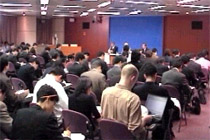 Market leading NTT DoCoMo’s consolidated financial results for the six months ending Sept. 30th were announced last week at this press conference in Tokyo. Operating revenues were up 6.4% while operating income was down 7.8% with earnings per share 3.9% lower when compared to the same period last year. Dr. Kenji Tachikawa, President and CEO stated “During the first six months of fiscal year ending March 31, 2004, the Japanese cellular phone market posted robust growth with the number of net additional subscribers reaching 2.94 million. The enviroment surrounding our business, however, became harsher as the competition among mobile telecom companies intensified..” He also had some interesting comments about their strategy going forward to year end. Full Program Run-time 14:57