

Vodafone V603 Models Appeal to 2G Mobilers
WWJ’s director of digital media Lawrence Cosh-Ishii was on the platform at JR Ebisu station on Tokyo’s Yamanote circle line earlier today and spotted a new ad for Vodafone’s V603T (from Toshiba). The Toshiba model and its partner, the V603SH (Sharp), released in February, both feature much-improved analog TV and FM radio functionality and the Sharp model has a built in 3D motion sensor. The ad campaign and the new cellys highlight Vodafone’s continued development of cutting-edge 2G models.
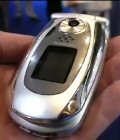 In today’s program, we speak with Yutaka Nakamae from Panasonic’s Corporate External Relations Group who met with us during last fall’s CEATEC consumer electronics show in Tokyo. While there’s plenty of eye candy, including Panny’s 900iV (released in mid-2004), some skin-able models to please those who can’t decide on their favorite color and the very cool GSM X700 (now on sale in Europe), the real intelligence relates to finding our who’s boss in the carrier/manufacturer relationship (Hint: Who owns the customer?). Today’s proggy is not only a fun one — showing some great cellys from the October CEATEC show — but it also reconfirms the reality of the relationship between cell-phone makers and cellular operators in Japan — in this case, Panasonic and DoCoMo.
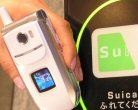 Mass transit meets mobile technology for Tokyo commuters in a new service enabling NTT DoCoMo FeliCa-equipped i-mode cell phones to function as Suica JR train commuter cards. The new service will combine DoCoMo’s FeliCa smart card e-money platform with the Suica IC train commuter card (both using technology developed by Sony) into one mobile handset that can simultaneously pay for train tickets, commuter passes, airline and movie tickets and purchases at any of 14,000 — and counting — retailers.