

Global Lessons from Mobile Computing in Japan
 We recently spent a fascinating hour with James Gosling, godfather of Java and an eloquent supporter of open standards and common sense when it comes to mobile application development. James points out that NTT DoCoMo has let anyone drop software into the network and get paid. But North American carriers don’t appear to have taken the hint. “[They] have this attitude that their networks need to be closed. Personally, I don’t buy it. They’re being very, very short-sighted.” Mobile business developers and service planners everywhere: Don’t miss this one.
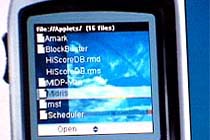 We spent a day at Sun Microsystem’s JavaOne conference and show in Yokohama in September, and were pleasantly surprised to meet up with mobile software vendor Openwave, grand-daddy of the WAP Forum (freshly repainted as the Open Mobile Alliance). Japanese carriers have created killer Java services… and they had to do so from scratch. That included the provisioning system which actually feeds the applis onto the handsets (providers merely have to write the downloadable Java code). Now another major player has launched a Java provisioning system (which also works for other content). Want to launch Java, but you’re not partnered with DoCoMo? You’d better watch this one twice…
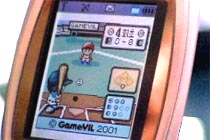 By platform, mobile games (mostly Java, as far as we could see) represented 9.2 percent of the 393 new titles announced at the TGS, a significant if yet modest chunk of the overall game market. This was up steeply from 4.1 percent of 339 titles at the fall 2001 show, but still not equal to the 11.0, 14.7, and 17.1 percent shares seen at the spring 2001 (309 new titles), fall 2000 (334 new titles), and spring 2000 (380 new titles) shows, respectively. We have lots of Java screen savers,” said Taito Corporation at the DoCoMo booth; Seoul-based game maker GameVIL comes ashore to leverage made-in-Korea BREW expertise (KTF’s BREW allows 200KB downloads — the standard for KDDI to beat?); and advice on creating successful Java services from PCCW: “Prepare a good environment for the developers.” Daniel had a splitting headache, but this program rocks!