

Vodafone's Half-Time Show
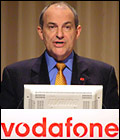 On 16 November, Dr. Brian Clark, acting president and CEO, Vodafone KK, presided at an Imperial Hotel presser announcing Vodafone Japan’s first-half results for the fiscal year ending 31 March 2005. Despite mobile operating revenue falling 2.5 percent year-on-year (to 736.8 bn yen), Clark put on a brave face and emphasized the new 3G terminal line-up, increased 3G coverage, growth in prepaid, and enhanced roaming. Nonetheless, several of his comments contrast sharply with what WWJ knows to be true about the Japan market.
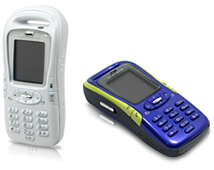 Cellcos and handset manufacturers here are counting on the seemingly limitless Japanese craving to trade up to the trendiest and newest feature-packed cellies to push cash flow forward. Right behind the recent roll out of DoCoMo’s shiny, feature-packed 3G FOMA 901i-series comes a new line of four “Mova” (the carrier’s 2G brand) handsets targeting niche buyers. Lets take a look at these babies as each one has a distinctive feature targeting a specific, finicky, not-yet-ready-for-3G keitai shopper.
 As if Japanese phones weren’t mobese enough, KDDI is first out of the gate with music distribution for cell phones — allowing multi-slackers to download artists’ songs in their entirety right to the handset. Launching this month, users of EZ Chaku Uta Full (Chaku – download, uta – song, full – in its entirety, get it?) will have access to 10,000 songs from six web sites covering everything from pop princess Hilary Duff to indie artists. Playlist and music sites are set to expand over the coming year. The company also plans to enable downloads through their ‘NOW On Air’ FM radio subscription service, though a start date has not yet been set. Content fee per song should average around 315 yen and transmission speed will hit a maximum of 2.4 Mbps under KDDI’s ‘Double Flat’ fixed packet charge service.