

Foreign Developers Target Japan
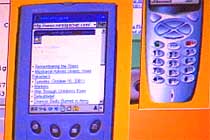 WiredPocket is a US-based mobile software startup focusing on the enterprise space. That’s fine for over there, but it’s just a tiny slice of the primarily consumer market over here.
So why in heck would WP open a Japan office.. have they really got a chance?
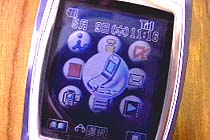 Takaharu Mita is just a regular guy with a DoCoMo 3G videophone — but like many early-adopters, he’s got no one with whom to hold video calls. In March, he posted his number on his “FOMA Diary” Web site and invited the world to call — anytime. Well, the world responded, and Mita-san has got a lot to say about videophones, Big D, and how society’s gonna change…
 Japan’s Omron has tied up with America’s Cellport to commercialize telematics technology that will allow onboard sensors to report maintenance, operation, and other data to a central server using a keitai. We take a look at a Cellphone-enabled Jeep parked in downtown Tokyo and speak with the CEO of Omron Cellport Telematics Inc. to find out when we’ll be able to buy a Lexus that’ll transmit low engine oil problems straight to the garage (Not that soon..)
  This week, we finish up our Killer Interview Series and find out how NTT DoCoMo is handling spam, a serious quality-of-service issue. Why don’t the other carriers have similar spam problems? Maybe they’re just not telling…
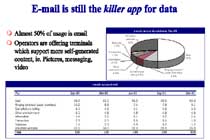 In the first part of our Killer Interview Series with one of Tokyo’s contrarian telecoms analysts, we find out what happens to data ARPU when price-insensitive, heavy-volume users migrate to new services (like Java). The answer? It’s not a pretty sight, and the same may be in store for 3G. Plus, we cover ARPU stats, compare FOMA data usage to 2G, and reveal what generates the most packet traffic (think “self-generated content”).
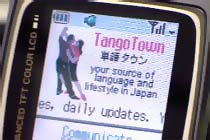 Tango Town — a recently launched J-Sky wireless Web site — works as well with Japanese fonts, characters, and data encodings as with English.