

Vodafone's 256K Java: Pricey Eye Candy
It’s been long argued that Japan’s mobile Internet can be divided into two eras: pre- and post-Java. Despite the 100K (or lower) limit imposed on Java applications by all three operators and a low cost of just a couple of hundred yen per download, the mobile application environment has been crucial in boosting usage, packets and profits, particularly at NTT DoCoMo. Java has been cheap for the public – and a moneymaker for the carriers. But a richer Java experience, introduced by Vodafone Japan, is what a high-end segment of the Japanese crowd is looking for.
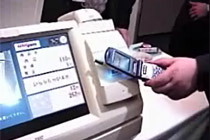 Wireless Watch Japan attended NTT DoCoMo’s December 15 press conference demonstrating the first phones to feature the Sony developed “Felica” peer-to-peer payment system. To debit the cash stored on the phone’s IC chip, all you do is swipe the handset in front of a reader; more cash can be downloaded via the i-mode network. The trial, using 2,500 each of the N504iC and SO504iC handsets (engineered by NEC and Sony) will run from today and until mid-2004, when full commercial service is expected to start. DoCoMo have lined up 27 e-payment service providers, including banks, convenience stores, TV broadcasters, game software publishers, and a retail ticketing outlet. There are already 17 million Japanese happily using Felica-based IC cards for train tickets and convenience store payments, many of whom have – surprise! – cell phones. We think the synergy and revenue potential of the two technologies is obvious – and so do DoCoMo’s accountants. Watch our first-on-the Web video report from Monday’s press event – and rethink your i-mode forecasts. Full Program Run-time 3:00